
THE WINES
CAPONI E MARSILI
THE WINES
CAPONI E MARSILI
Rico
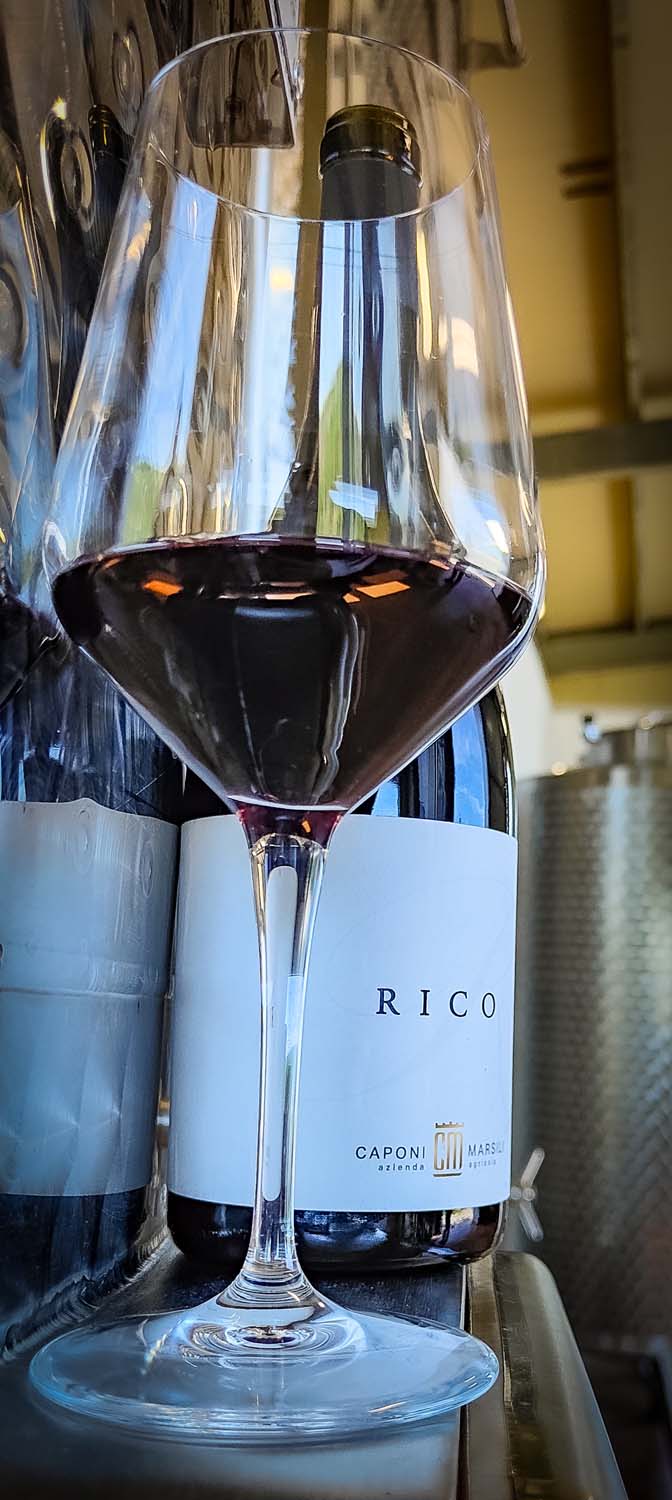
RICO stands as an iconic representation of our work philosophy. It’s dedicated to the founder of our company, our grandfather, and signifies our historic vineyard. Planted in the early 1960s with the initial purpose of selling grapes, this Montepulciano vineyard was one of the first in the valley.
It features old vines grafted locally, their deep-rooted knowledge allowing them to deliver outstanding performance. We can confidently say this vineyard boasts a genetic heritage of at least 100 years.
Moreover, it harbors at least five Montepulciano cultivars, alongside a few vines for table grapes, affectionately referred to as “uva cornetta.” These grapes acted as a signal for the perfect harvesting time. In the past, without the technological aids we have today, this method was a more straightforward way to determine the grape’s ripeness, aligning perfectly with the Montepulciano’s maturity.
When we inherited this vineyard, it had aged and didn’t readily adapt to modern management needs. However, given its significance as the source of our family wine, we chose to restore it rather than replant.
We replaced the entire set of wires and posts in the vineyard, a more challenging and strenuous task than anticipated. Additionally, the vines underwent a “reformative pruning” to adapt their profile to the new wire and post system. To preserve biodiversity, we opted to replace any missing vines with new ones bred specifically for us, utilizing our genetic material.
The grapes obtained from this vineyard are processed traditionally, in honor of our grandfather and his methods. With the exception of rigorous fermentation control and a relatively long maceration period of approximately 30 days, the wine undergoes no special treatments before bottling. This is essential to convey the true essence of the land, the grapes, and the tradition.
Rico
RICO stands as an iconic representation of our work philosophy. It’s dedicated to the founder of our company, our grandfather, and signifies our historic vineyard. Planted in the early 1960s with the initial purpose of selling grapes, this Montepulciano vineyard was one of the first in the valley.
It features old vines grafted locally, their deep-rooted knowledge allowing them to deliver outstanding performance. We can confidently say this vineyard boasts a genetic heritage of at least 100 years.
Moreover, it harbors at least five Montepulciano cultivars, alongside a few vines for table grapes, affectionately referred to as “uva cornetta.” These grapes acted as a signal for the perfect harvesting time. In the past, without the technological aids we have today, this method was a more straightforward way to determine the grape’s ripeness, aligning perfectly with the Montepulciano’s maturity.
When we inherited this vineyard, it had aged and didn’t readily adapt to modern management needs. However, given its significance as the source of our family wine, we chose to restore it rather than replant.
We replaced the entire set of wires and posts in the vineyard, a more challenging and strenuous task than anticipated. Additionally, the vines underwent a “reformative pruning” to adapt their profile to the new wire and post system. To preserve biodiversity, we opted to replace any missing vines with new ones bred specifically for us, utilizing our genetic material.
The grapes obtained from this vineyard are processed traditionally, in honor of our grandfather and his methods. With the exception of rigorous fermentation control and a relatively long maceration period of approximately 30 days, the wine undergoes no special treatments before bottling. This is essential to convey the true essence of the land, the grapes, and the tradition.
Lode
is an exceptional white wine that stands out from the crowd. It draws inspiration from our mother, Lodena, affectionately known as Lode. This wine is exceptional both in terms of its production and its origin story.
In reality, it was born out of both careful planning and necessity. LODE is made from the grapes harvested in the early years of our vineyards. Due to adverse weather conditions, the yield, although of excellent quality, was low. This limited the option of working with individual grape varieties like Pecorino, Passerina, Muller, and Gold Traminer separately. We did not want to create a mundane, personality-lacking wine that wouldn’t reflect the spirit and original idea.
We found a solution by drawing inspiration from another family tradition: drying grapes in the attic to enjoy during the winter months. We took a risk and decided to let the grapes wither in the vineyard. We harvested them in mid-October, resulting in semi-withered grapes, which became the foundation for LODE.
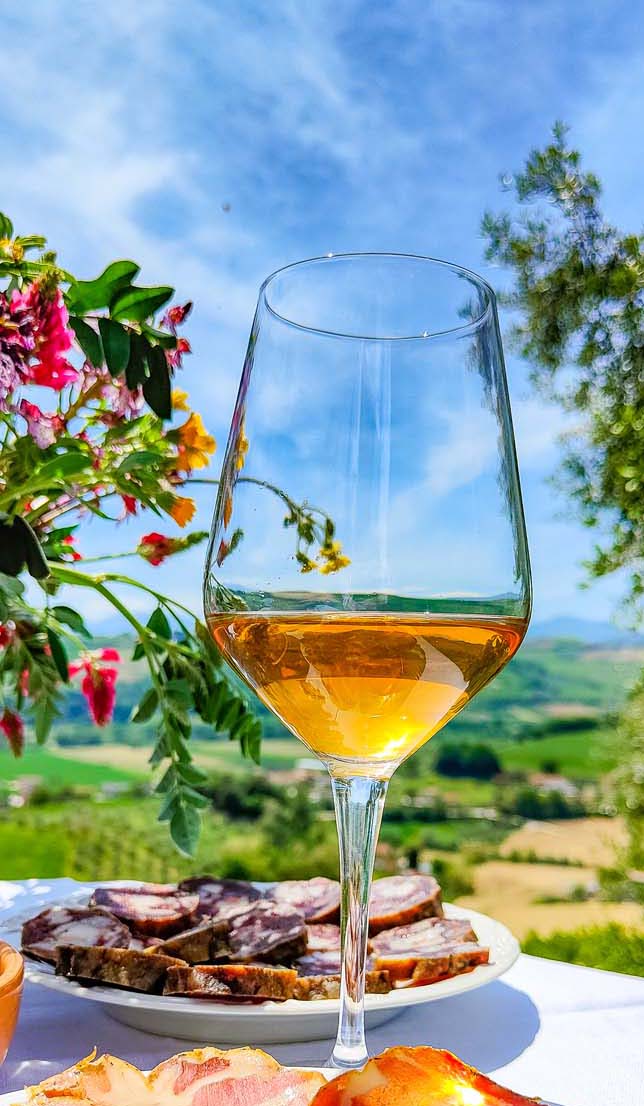
The fermentation process was meticulously controlled to minimize interventions and maintain the wine as naturally as possible. We used yeast capable of enhancing acidity and aroma. The outcome is a wine with a deep golden hue, fresh acidity, and a delightful and fresh aroma, all while exhibiting a strong character.
Lode
is an exceptional white wine that stands out from the crowd. It draws inspiration from our mother, Lodena, affectionately known as Lode. This wine is exceptional both in terms of its production and its origin story.
In reality, it was born out of both careful planning and necessity. LODE is made from the grapes harvested in the early years of our vineyards. Due to adverse weather conditions, the yield, although of excellent quality, was low. This limited the option of working with individual grape varieties like Pecorino, Passerina, Muller, and Gold Traminer separately. We did not want to create a mundane, personality-lacking wine that wouldn’t reflect the spirit and original idea.
We found a solution by drawing inspiration from another family tradition: drying grapes in the attic to enjoy during the winter months. We took a risk and decided to let the grapes wither in the vineyard. We harvested them in mid-October, resulting in semi-withered grapes, which became the foundation for LODE.
The fermentation process was meticulously controlled to minimize interventions and maintain the wine as naturally as possible. We used yeast capable of enhancing acidity and aroma. The outcome is a wine with a deep golden hue, fresh acidity, and a delightful and fresh aroma, all while exhibiting a strong character.